
El Arte de la Facilitación Regenerativa
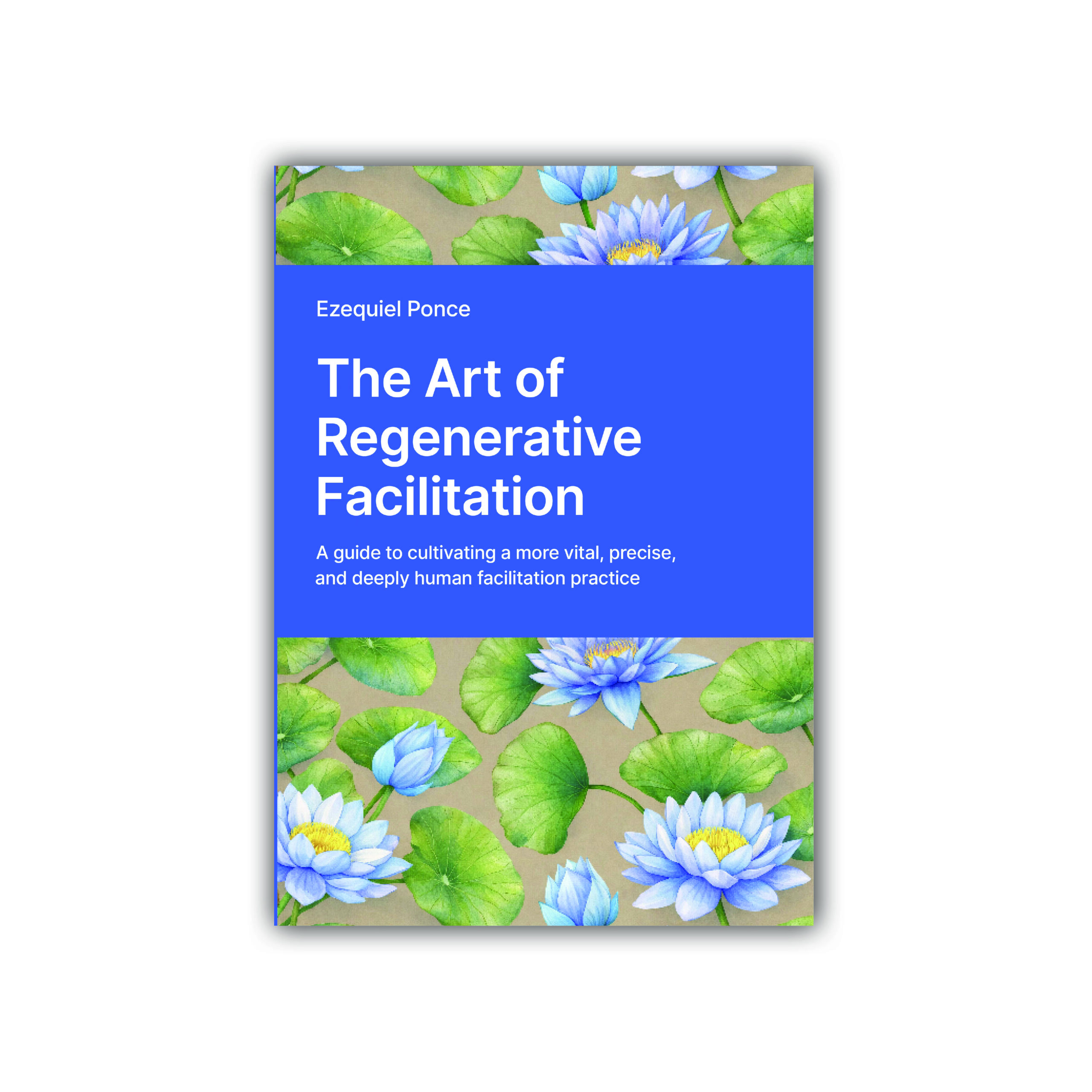
DESCRIPCIÓN
En El arte de la facilitación regenerativa, Ezequiel Ponce propone un giro decisivo: pasar de un modelo de facilitación centrado en técnicas, formatos y secuencias a una práctica fundamentada en la presencia, la percepción y la capacidad de acompañar procesos vivos desde dentro.
Lejos de ofrecer recetas o fórmulas estandarizadas, este libro propone una comprensión más profunda del acompañamiento. Aquí, facilitar no se limita a conducir conversaciones o aplicar ejercicios. Se trata de aprender a leer el campo, sostener la coherencia del proceso y participar lúcidamente en la reorganización de lo que está emergiendo.
A través del framework BeRegenerative™, el libro desarrolla una arquitectura clara y rigurosa articulada en torno a principios como vida, campo, emoción, sentido, presencia y estética. Cada capítulo combina reflexión conceptual y entrenamiento práctico mediante microacciones, preguntas para la reflexión y ejercicios de observación, convirtiendo la lectura en una experiencia real de aprendizaje.
Este libro está dirigido a facilitadores, coaches, consultores, formadores, líderes de equipos y profesionales del aprendizaje que quieran afinar su práctica desde una perspectiva más encarnada, ética y precisa. No enseña simplemente qué hacer. Enseña desde dónde estar, cómo percibir y cómo intervenir sin capturar el proceso.
SOBRE EL AUTOR:
Ezequiel Ponce es el fundador de CANVAS FOR YOU®, el creador de sus herramientas y el autor del framework CFY BeRegenerative™. Facilitador, autor y experto en liderazgo regenerativo y vitalidad organizacional. Cuenta con más de 25 años de experiencia acompañando a líderes y procesos de desarrollo en entornos organizacionales.
Ha liderado proyectos para organizaciones como IKEA, BBVA, Lidl Digital y The Walt Disney Company, entre otras. Es creador de metodologías y herramientas diseñadas para dar respuesta a los retos del presente.
Sus herramientas han sido utilizadas en más de 12 países por más de 1.000 profesionales, consolidando un enfoque propio que integra presencia, percepción, diseño de experiencias y facilitación regenerativa.
Contenidos
- 2 secciones
- 36 lecciones
- 52 semanas
- 🇪🇸 El Arte de la Facilitación RegenerativaUn recorrido práctico para acompañar procesos vivos de aprendizaje desde el marco BeRegenerative™ - La facilitación regenerativa se apoya en la ciencia, pero se ejerce como un arte.18
- 1.1🗒️ Antes de comenzar5 minutos
- 1.2🗂️ Prólogo6 minutos
- 1.3🗂️ Introducción5 minutos
- 1.4🗂️ I. Fundamentos de la presencia regenerativa
- 1.5🗒️ 1. Acompañar10 minutos
- 1.6🗒️ 2. Interdependencia10 minutos
- 1.7🗒️ 3. Organismo10 minutos
- 1.8🗂️ II. Inteligencia del proceso vivo
- 1.9🗒️ 4. Coherencia10 minutos
- 1.10🗒️ 5. Custodia10 minutos
- 1.11🗒️ 6. Ritmo15 minutos
- 1.12🗂️ III. Madurez perceptiva del facilitador
- 1.13🗒️ 7. Reflexibilidad10 minutos
- 1.14🗒️ 8. Ética y estética10 minutos
- 1.15🗂️ Conclusión5 minutos
- 1.16🗂️ Epílogo6 minutos
- 1.17🗒️ Preguntas y Respuestas10 minutos
- 1.18🗂️ Glosario10 minutos
- 🇺🇸 The Art of Regenerative FacilitationA practical journey for accompanying living learning processes through the BeRegenerative™ framework. Regenerative facilitation is grounded in science, but practiced as an art.18
- 2.1🗒️ Before You Begin5 minutos
- 2.2🗂️ Preface6 minutos
- 2.3🗂️ Introduction5 minutos
- 2.4🗂️ I. Foundations of Regenerative Presence
- 2.5🗒️ 1. Accompanying10 minutos
- 2.6🗒️ 2. Interdependence10 minutos
- 2.7🗒️ 3. Organism10 minutos
- 2.8🗂️ II. The Intelligence of the Living Process
- 2.9🗒️ 4. Coherence10 minutos
- 2.10🗒️ 5. Holding10 minutos
- 2.11🗒️ 6. Rhythm10 minutos
- 2.12🗂️ III. The Facilitator’s Perceptual Maturity
- 2.13🗒️ 7. Reflexivity10 minutos
- 2.14🗒️ 8. Ethics and Aesthetics10 minutos
- 2.15🗂️ Conclusion5 minutos
- 2.16🗂️ Epilogue6 minutos
- 2.17🗒️ Questions and Answers10 minutos
- 2.18🗂️ Glossary10 minutos
FAQ
Autor
© Copyright.
- © Copyright. Ezequiel Ponce. Todos los derechos reservados. Este contenido está protegido por derechos de autor. El acceso a este material se concede exclusivamente para su lectura y visualización dentro de esta plataforma. No está permitida su descarga, copia, reproducción, distribución ni utilización, total o parcial, por ningún medio o soporte, sin la autorización expresa, previa y por escrito del titular de los derechos, a excepción de aquellos contenidos que se indiquen explícitamente como disponibles para descarga.
A quiénes está dirigido
- It is written for facilitators, coaches, consultants, trainers, team leaders, and learning professionals who want to take their practice to a higher level of precision, presence, and depth. It is especially valuable for those who already support conversations, workshops, group processes, or spaces for transformation and feel they need something beyond tools: judgment, clarity, and a more vital way of practicing this profession.
Cursos Relacionados Con El
 Autor
Ezequiel Ponce-Iovine
Autor
Ezequiel Ponce-Iovine
 Autor
Ezequiel Ponce-Iovine
Autor
Ezequiel Ponce-Iovine